
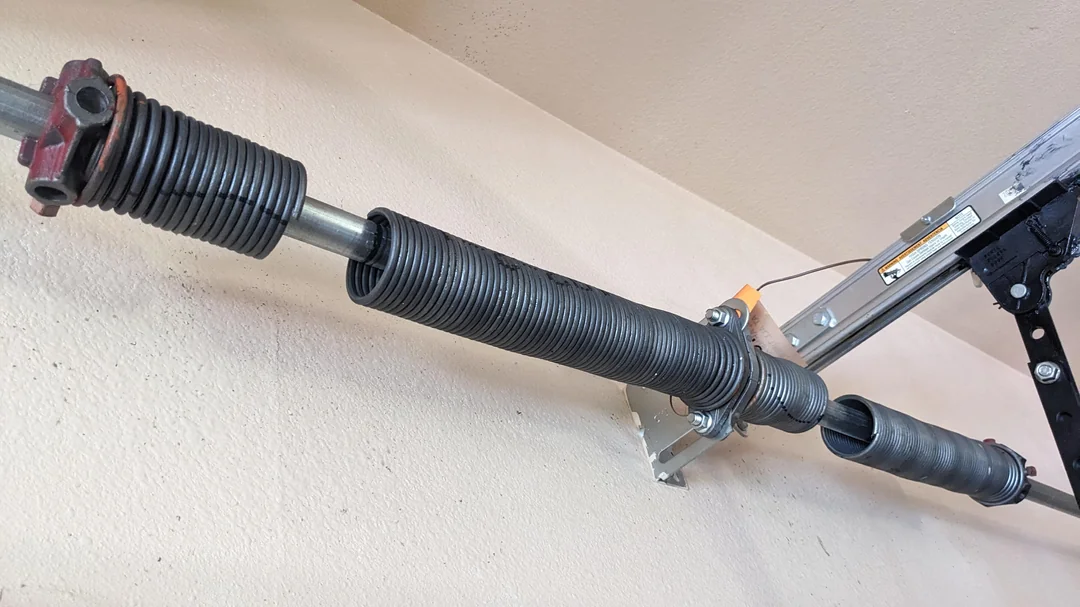
A 50-pound coiled spring under tension stores enough energy to break bones, blind eyes, and put people in the hospital. Every year, ER doctors across DFW see garage-door-spring injuries from homeowners who tried to save $300. Here's why this one repair is never worth the DIY risk.
What Makes Springs So Dangerous
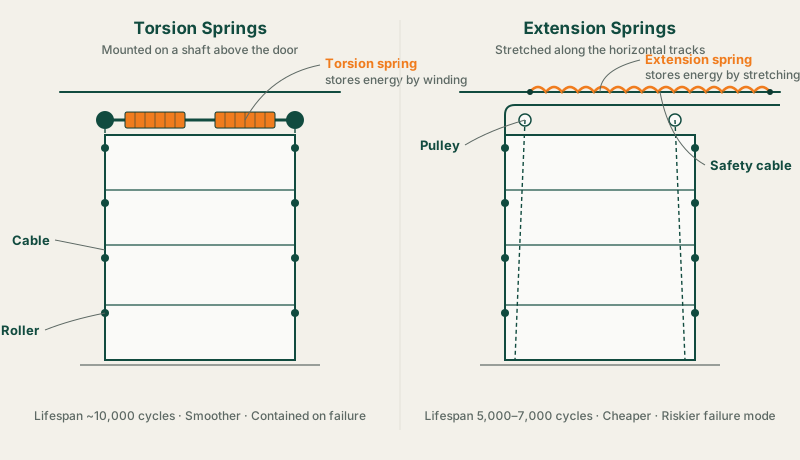
A typical residential garage door uses one or two torsion springs mounted on a shaft above the door. They're under enormous tension — 200–300 pounds of force, wound to roughly 7 turns of pre-load.
When that tension releases unexpectedly:
- The spring can unwind in milliseconds
- Loose hardware (winding bars, drums, cables) becomes projectiles
- The door itself can drop suddenly — 200+ pounds of door released from counterweight
The CPSC reports thousands of garage-door-spring injuries annually. Most common outcomes: lacerations to face and hands, fractured fingers, eye injuries, concussions from being struck by released parts.
The Specific Mistakes That Cause Injuries
Wrong tools. Springs are wound with hardened-steel winding bars sized to the spring's winding cone. Homeowners often try with screwdrivers, rebar, or a regular wrench. These bend or slip under load — and the spring unloads catastrophically.
Not blocking the door. The door has to be supported while the spring is unwound. People forget, and the door drops on them as soon as tension releases.
Mismatched springs. Springs are sized by the door's weight (in pounds) and travel distance (in inches). Using a “looks-about-right” spring from a hardware store puts the door out of balance immediately and shortens spring life by up to 80%.
One side at a time on dual-spring doors. Most builder-grade double-car doors have two springs. Replace one and not the other, and the second fails within weeks — usually during operation.
Cable confusion. Cables and springs are interconnected. A DIYer working only on the spring often ends up with a cable that's now too tight or too slack, and the door fails the first time it cycles.
What a Pro Brings to the Job
A professional tech replacing torsion springs has:
- The right winding bars and a torque wrench
- A second person or rated door braces to support the door
- A scale to weigh the door and calculate correct spring size
- Knowledge of cable tension specs for your specific door brand
- Insurance if something goes wrong on your property
The actual labor takes 30–45 minutes. The price is mostly the spring ($75–$150 each at trade pricing) plus the technician's skill and risk.
The Real Numbers
| Repair | DIY parts | Pro installed | The math |
|---|---|---|---|
| Single torsion spring | $75–$120 | $220–$320 | $100–$200 of labor for a 30-min job that can break your hand |
| Both torsion springs | $150–$240 | $350–$520 | Trade-priced parts shrink the savings further |
| Cable replacement (pair) | $25–$45 | $135–$220 | Same picture |
The savings rarely exceed $300. The downside is a hospital visit, a door that fails within months, or both.
What You CAN Safely Do
- Lubricate the spring coils (don't touch winding cones)
- Visually inspect for fraying, kinks, gaps in the coil
- Test the door balance (with opener disengaged, lift halfway by hand)
- Replace remote batteries
- Clean photo-eye sensors
Anything involving a winding bar, loosening a set-screw on the winding cone, or releasing cable tension is a pro job. Period.
A Real-World Story from the Field
A DFW homeowner last summer tried to replace a snapped spring with a YouTube tutorial. The unwinding spring caught his hand, breaking three fingers and his wrist. Hospital bill: $14,000. Our subsequent repair quote: $440. He saved exactly negative $13,560.
How to Catch a Failing Spring Early
Look for these warning signs during your family safety check:
- Visible gap anywhere in the coil = pre-failure warning
- Loud bang from the garage with no apparent cause = it just broke, stop using the door
- Door suddenly feels twice as heavy to lift manually = one of two springs has weakened
- Door slams shut faster than usual = spring tension is dropping
Planned early replacement: $350–$520. Emergency replacement: same range plus possible damage to opener, panels, or cables. See our cost guide for context.
The 10,000-Cycle Rule
Standard springs are rated for ~10,000 open/close cycles — 7–12 years of typical use. DFW heat shortens that to the low end. If your door is 8+ years old and hasn't had a spring service, schedule preventive replacement now. We'll inspect first and only recommend replacement if the springs show fatigue. For the difference between spring types and replacement options, see torsion vs. extension springs.
Bottom Line
Spring work isn't a project for the handy weekend warrior. It's the one job we tell our own family members to call us for. The savings aren't worth the risk — and they're smaller than DIYers expect.