Your garage door opener gets used roughly 1,500 times a year. Pick wrong and you'll hear it from the master bedroom every morning at 6:32 a.m. Pick right and you won't think about it for a decade. Here's what actually matters when choosing one in 2026.
The Three Drive Types
Every opener falls into one of three categories. The right choice usually comes down to where your garage sits relative to the rooms above it.
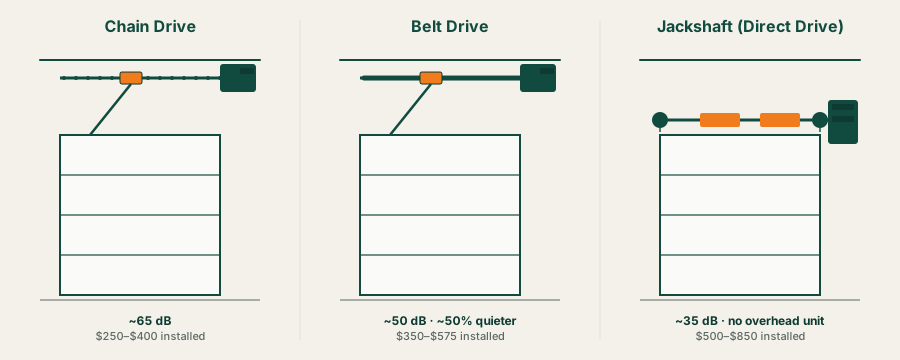
Chain drive ($250–$400 installed). The original workhorse — a metal chain pulls the door open. Loudest of the three but bulletproof, and the cheapest. Best for detached garages or homes where there's no living space above the garage.
Belt drive ($350–$550 installed). Replaces the chain with a reinforced rubber belt. Whisper-quiet — about 50% less noise than chain, same lifting power. The right pick when bedrooms sit above the garage, and the majority choice for new DFW installs.
Direct drive or jackshaft ($500–$850 installed). Direct drive moves the motor along a stationary rail. Jackshaft mounts on the wall beside the torsion spring — no overhead unit at all, so ceiling space stays clear for storage racks or vaulted garages. The quietest option, and the only one if you've added an overhead storage system that blocks a traditional opener. Premium price.
How Much Horsepower Do You Need?
You'll see openers rated by horsepower (HP) or pulling force (lbs). Match the opener to the door, not the other way around:
| Door Type | Minimum Recommended | Notes |
|---|---|---|
| Single car, lightweight steel | ½ HP / 600 lbs force | Adequate but not generous |
| Standard double-car (16 ft) | ¾ HP / 800 lbs force | The sweet spot for most DFW homes |
| Insulated double or wood door | 1 HP / 1,200 lbs force | Heavier doors burn out underpowered motors |
| Oversized / carriage / 8 ft tall | 1¼ HP+ | Don't undersize — period |
The single most common mistake we see: a ½ HP opener on a heavy insulated door. It'll work — for 18 months. Then the motor cooks itself from being overworked. Size up if you're unsure.
Smart Features: What's Actually Worth Paying For
The honest answer: two features matter, and the rest is gimmick.
Battery backup. Given Texas' grid history, this is the single best $80–$120 upgrade you can make. A backed-up opener gives you 20–50 cycles during a power outage. California legally requires it on all new openers; Texas doesn't, but if anyone in the family ever needs to leave during a blackout (medical, work, weather), you'll be glad you spent the money. See our storm prep guide for why this matters in DFW.
Wi-Fi smartphone control. The big platforms are MyQ (LiftMaster / Chamberlain), Genie Aladdin Connect, and Sommer. All let you open or close the door, get alerts when it cycles, and check status from anywhere. Genuinely useful for: confirming the door is closed after you leave, letting in a service technician remotely, getting alerts when teens come home. Not useful for: gimmicks like the door opening automatically when you pull up. Stick to a platform that integrates with whichever smart-home ecosystem you already use (Alexa, Google Home, or Apple Home).
Skip: built-in opener cameras (just buy a real garage camera for half the price), AI package detection (gimmick), keypad-on-the-app (use a real wall-mounted keypad).
Security: One Feature You Should Insist On
Modern openers use rolling-code encryption — the access code changes every time you press the remote, so a recorded signal can't be replayed by a thief with a $20 device. Anything sold by LiftMaster, Chamberlain, Genie, or Sommer in the last decade has this. If you're inheriting an older opener (15+ years) without rolling codes, replace the opener. The security risk alone is worth $400.
Brand Reality Check (2026 DFW Market)
| Brand | Best Known For | Watch-Out |
|---|---|---|
| LiftMaster | Premium pro line. Best Wi-Fi platform (MyQ). Best warranties. | Costs 20–30% more than equivalents |
| Chamberlain | LiftMaster's consumer-channel brand. Same MyQ ecosystem. | Slightly lighter-duty motors |
| Genie | Reliable mid-tier. Aladdin Connect for smart features. | Some belt models squeak after 5+ years |
| Sommer | Premium direct-drive, German-engineered. Genuinely quiet. | Pricier; harder to find local parts |
| Ryobi | Modular battery-tool ecosystem. Polarizing. | Niche; fewer local techs service them |
For most DFW homes with bedrooms over the garage, a LiftMaster or Chamberlain belt drive with battery backup is the sweet spot: $450–$600 installed, 12–15 year lifespan, quiet enough you won't notice it from upstairs. If you're fighting a noisy door, also see how to make a noisy garage door quiet again.
Lifespan and Warranty Expectations
Honest expectations from what we see in the field:
- Motor — 12–15 years typical, longer with light use, shorter on a heavy uninsulated door
- Belt — 10–12 years (longer than the motor in most cases)
- Logic board — 8–12 years; this is the most common failure point, and the fix is often cheaper than a full replacement
- Battery backup — 3–5 years; replaceable
Typical warranties: 10 years motor, 5 years belt, 1 year electronics, lifetime on chains. Read the fine print — most warranties require professional installation to remain valid.
DIY vs. Professional Install
A new opener install takes a pro about 90 minutes. DIY takes a first-timer 4–6 hours and usually needs a do-over for spring force and sensor alignment. The pro install ($150–$250 above the opener cost) gets you:
- Proper force / travel-limit calibration (the auto-reverse safety fails if these are off)
- Sensor alignment — the #1 cause of “opener won't close” calls
- Haul-away of the old unit
- A warranty that stays valid (most manufacturers require professional install)
If you're handy and the existing opener wiring and mounting brackets are reusable, DIY is doable. If you're replacing a 20-year-old unit, get a pro. Spring and cable work always requires a pro — see why you should never DIY a garage door spring.
The Steward Recommendation Framework
For most DFW homeowners, the decision tree is short:
- Detached garage, budget priority: Chamberlain ½ HP chain — ~$300 installed. Will outlive your car.
- Living space above the garage: LiftMaster ¾ HP belt with battery backup — $500–$575 installed.
- Vaulted ceiling, premium home, or overhead storage: LiftMaster 8500W jackshaft or Sommer direct drive — $700–$850 installed.
- Heavy wood or oversized carriage door: 1 HP+ belt or jackshaft. Don't undersize.
We don't sell openers as a profit center — we install what fits your door and house. A free in-home consultation gets you a written recommendation with installed pricing before you commit. For full pricing context, see our repair cost guide.