
If your garage door sounds like a freight train every morning, you're not alone — and you don't necessarily need a new opener. About 80% of noisy doors can be quieted significantly with $150–$300 of targeted maintenance. Here's how to diagnose where the noise is coming from and what to do about it.
Start by Identifying the Noise
Stand in the garage and run the door once up, once down. The noise type tells you the source:
| Noise | Source | Fix |
|---|---|---|
| Grinding / rattling | Worn metal rollers | Replace with nylon ($150–$280) |
| Squeaking / squealing | Dry hinges or springs | Lubricate ($0–$15 DIY) |
| Clanking / banging | Loose hardware | Tighten with a socket wrench |
| Vibration through ceiling | Chain-drive opener | Replace with belt ($400–$575) |
| Popping | Track or panel issues | Call a tech |
| Buzzing without movement | Capacitor failure | Pro repair ($120–$260) |
For a deeper breakdown of what each sound means, see our garage door sound guide.
The 4-Step Quieting Tune-Up
Step 1: Lubricate Everything That Moves
- Use white-lithium grease or silicone garage-door spray
- Never WD-40 (it's a solvent, not a lubricant)
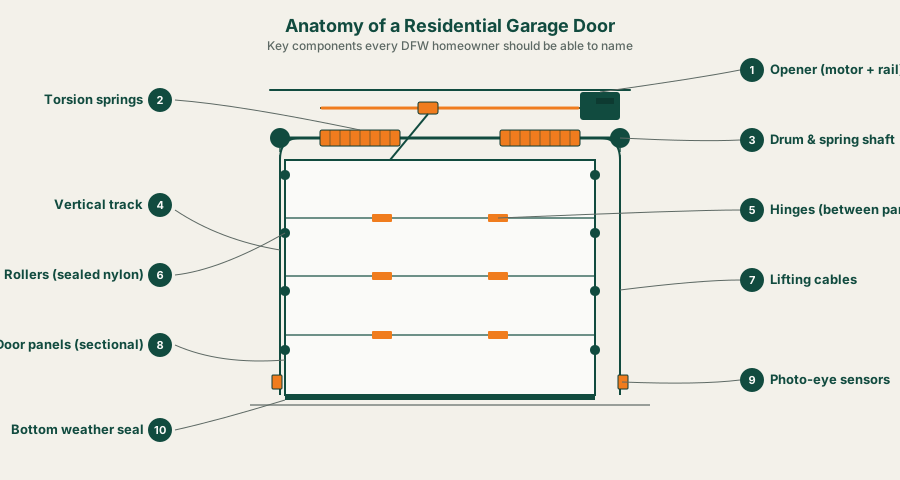
- Apply to rollers (one drop on each axle), hinges, spring coils, bearing plates, and the trolley rail
- Wipe excess so it doesn't drip on cars
This alone solves about 40% of “noisy door” calls.
Step 2: Tighten Loose Hardware
Vibration loosens bolts over time. Snug up:
- Hinge bolts (each panel has 2–4 hinges)
- Roller-bracket bolts
- Track-mounting lag bolts (where tracks attach to wall framing)
- Opener-mounting bolts (where the opener attaches to the ceiling)
Firm, not gorilla-tight. Over-tightening strips the threads.
Step 3: Replace Worn Rollers
If you have builder-grade steel rollers and they're 5+ years old, they're the single biggest noise contributor. Nylon rollers with sealed bearings:
- Cost $150–$280 installed (for a full set of 10–12)
- Cut operating noise by ~60–70%
- Last 15+ years vs. 7–10 for cheap steel
- Available in soft-tread versions for even more noise reduction
This is the highest-leverage single upgrade you can make. We sometimes do roller-only service calls and have homeowners genuinely shocked at the difference.
Step 4: Address the Opener (If Needed)
If you have a chain-drive opener and bedrooms above the garage, that vibration is coming through the structure regardless of what you do to the door itself. Three options:
- Tighten the chain to spec ($75–$130 service): helps but doesn't eliminate
- Add a vibration-dampening kit (foam isolators on the ceiling mount): $40–$90
- Replace with a belt drive ($400–$575 installed): the only real fix
See our opener buying guide for what to look for in a belt or direct-drive replacement.
The DFW Heat Factor
Texas summer heat — garage temps regularly above 130°F — accelerates roller bearing degradation roughly 2x compared to milder climates. If your door got noisy faster than expected, the heat is why. Plan on roller replacement every 8–10 years in DFW, vs. 12–15 further north.
Insulation as a Sound Reducer
If your door is non-insulated, a polyurethane-filled replacement door is dramatically quieter independent of the opener — the insulation absorbs vibration. Replacement is $1,500–$3,500 but worth knowing if you're already considering an upgrade. See our innovations guide for what's on the market.
What to Avoid
- Don't grease the tracks — tracks are guide rails, not lubrication points. Grease there collects dust and accelerates wear.
- Don't use WD-40 anywhere — it strips existing lubricant and dries out, creating tomorrow's bigger noise.
- Don't tighten the springs yourself — if a balance issue is making the door noisy, that's a pro fix. See why you should never DIY a garage door spring.
Bonus: Sound-Dampening Floor Mats
If you've done everything above and the remaining concern is the noise transmitted into living spaces, a heavy rubber mat under the door's rest position absorbs the impact when the door lands. Cheap ($25–$60) and surprisingly effective for that final “thud.”
When to Stop DIY-ing and Call
You've lubed, tightened, and replaced rollers — still noisy? Time for a diagnostic. Tracks may be misaligned or bent, springs may be tensioned wrong, or a panel may have warped. A 30-minute diagnostic ($39–$99, often waived if work is done) tells you exactly what's making the noise and what it costs to fix — better than guessing.