
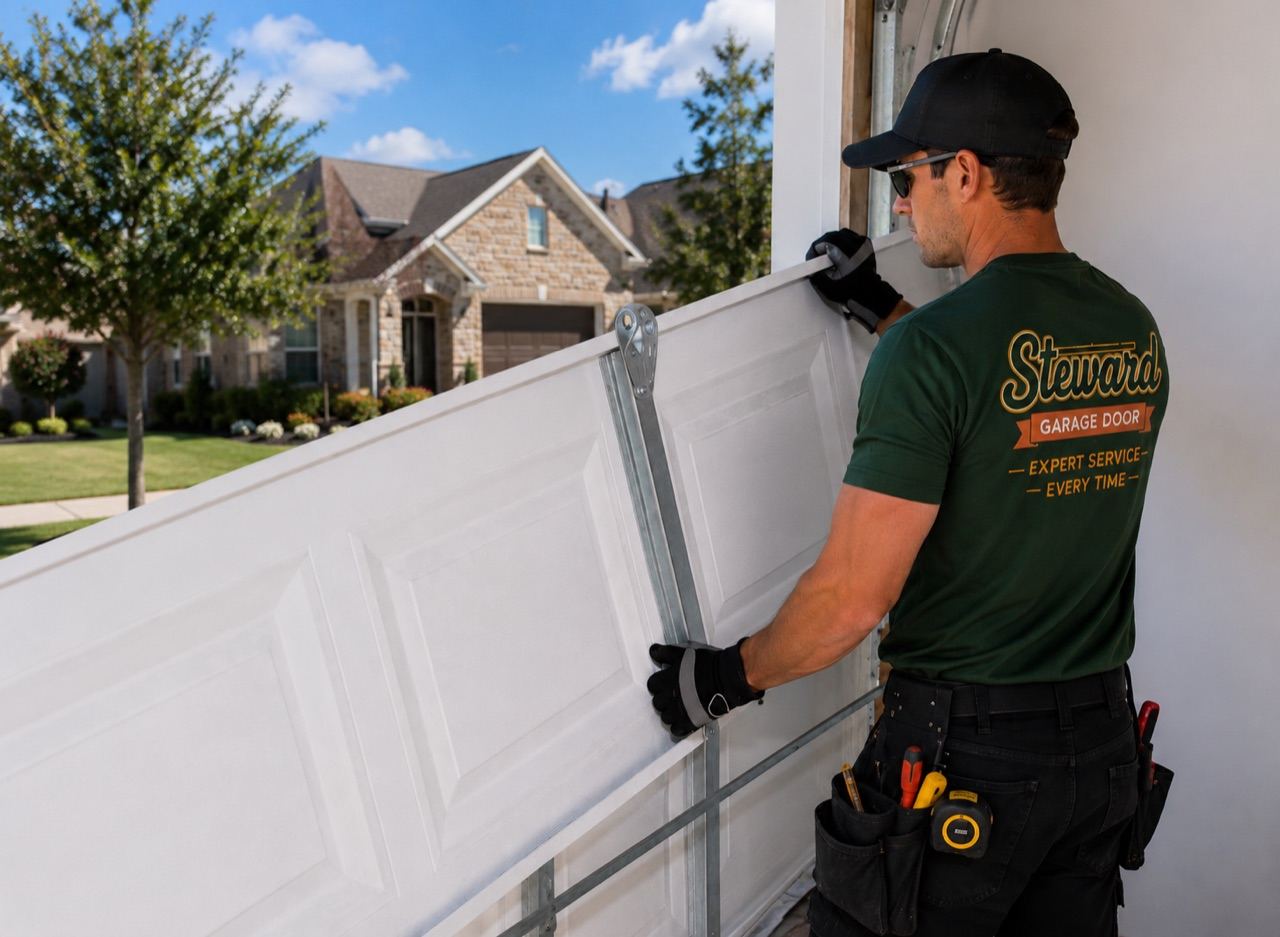
A garage door that suddenly sounds different is your home's most reliable early-warning system. Catch the problem at the noise stage and you're looking at a $150 fix. Wait until something fails outright and you're looking at $400–$700, an emergency call, and a door stuck in the wrong position. Here's how to translate what your door is telling you.
Grinding or Rattling
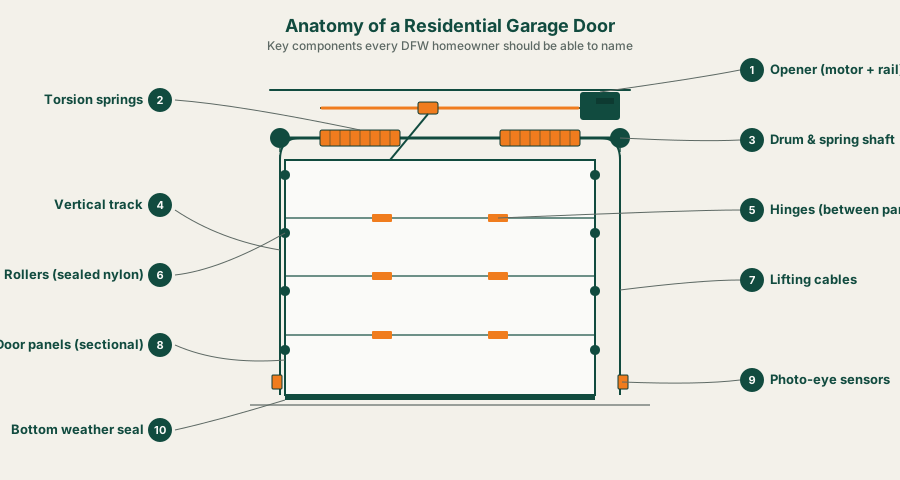
What it usually is: worn rollers, loose hardware, or both. The cheap steel rollers that come standard on most builder-grade DFW doors flatten and seize after 5–7 years. The result sounds like a freight train.
The DFW factor: Texas summer heat speeds up bearing degradation, and our year-round dust packs into open-bearing rollers faster than in humid climates.
Fix: Replace with sealed-bearing nylon rollers ($150–$280 installed). The door becomes whisper-quiet immediately. See how to make a noisy garage door quiet again for the full quieting playbook.
A Loud Bang or Pop
What it usually is: a snapped torsion spring. This is the most common emergency call we get in DFW.
Treat any single loud bang from the garage as urgent. Don't try to operate the door — running the opener against an unsprung door damages the motor, bends the track, and can pull the cables off the drums.
What to do: Disconnect the opener (pull the red manual release cord), call a tech. Don't touch the spring yourself — see why you should never DIY a garage door spring.
Squealing or Squeaking
What it usually is: dry hinges, rollers, and springs that need lubricant. Often the cheapest fix on the list — $0 if you already have garage-door spray on hand.
Use white-lithium grease or silicone garage-door spray. Never WD-40 — it's a solvent, not a lubricant. Apply to rollers, hinges, springs, and bearing plates. Wipe excess.
Persistent squealing after a proper lube usually means rollers are at end-of-life or the tracks are misaligned.
Straining or Grinding from the Opener
What it usually is: the door is out of balance, forcing the opener to do more work than it's designed for.
Test the balance: pull the manual release, then lift the door halfway by hand. It should stay there. If it sags or shoots up, the springs are out of adjustment — and your opener is working overtime.
An unbalanced door burns out an opener motor in 18–24 months. The fix (spring adjustment, ~$130) is far cheaper than a new opener.
Clanking or Banging Each Cycle
What it usually is: loose hardware vibrating against the door or tracks. Walk along the door with a socket wrench and snug up hinge bolts, roller-bracket bolts, and the track lag bolts. Firm, not gorilla-tight.
If the clanking persists, the bottom bracket may be damaged — that's a spring-tension part, leave it for a pro.
Buzzing Without Motion
What it usually is: a failed capacitor or seized opener gear. Common in DFW after summer power blips. The motor hums but the door doesn't move.
Fix: $120–$260 for a board or gear repair, or $400–$700 for a full opener replacement if the unit is 10+ years old. See our opener buying guide for what to replace it with.
Vibration That Comes Through the Wall
What it usually is: chain-drive opener tension is off, or the opener is loosely mounted to the ceiling joists.
If you have bedrooms above the garage and the chain-drive shake is waking you up, the long-term fix is replacing the opener with a belt drive (~$500 installed). The interim fix: tighten the chain to spec and add a vibration-dampening kit to the ceiling mount ($40–$90).
When to Pay Attention Immediately
New noise plus any of these = call now:
- Hesitation or pausing mid-cycle
- Door visibly crooked when closed
- Any visible play in a roller, hinge, or cable
- The door looks different in its rest position than it did a week ago
Most noise issues are inexpensive to fix when caught early. A 60-second listen during your monthly safety check (see our maintenance checklist) catches almost every problem before it becomes a callout.
The Steward Approach
If you're not sure whether a noise is normal wear or a warning sign, every Steward service call includes a free diagnostic listen-through. We identify the source, quote the fix in writing, and only do the work you approve. Trip charge is waived on appointments booked online.